






The Sacral Chakra is the second major chakra and is connected with emotions, creativity, relationships, pleasure, confidence, and the natural flow of life. When this energy center is balanced, a person may feel more joyful, emotionally open, creative, expressive, and comfortable with healthy relationships.
Sacral Chakra
Quick answer: The Sacral Chakra, also called the Svadhisthana Chakra, is traditionally described as the second major chakra. It is connected with emotional flow, creativity, pleasure, intimacy, relationships, flexibility, and the ability to receive and enjoy life with balance.
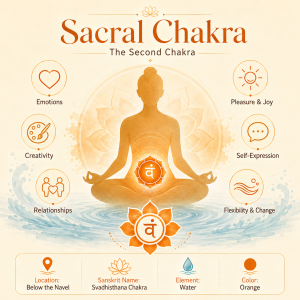
In Sanskrit, the Sacral Chakra is known as Svadhisthana Chakra. It is generally associated with the lower abdomen area, below the navel. This chakra is traditionally linked with the water element, orange color, emotional flow, pleasure, intimacy, creative energy, and the ability to accept change with flexibility.
At SMS Energy Healings, chakra awareness is used as a spiritual and energetic method to understand emotional blocks, relationship patterns, creative stagnation, guilt, suppressed feelings, and inner resistance. The purpose is to support emotional release, inner harmony, self-expression, and balanced life energy.
Sacral Chakra At A Glance
| Focus | Traditional Association | What To Observe |
|---|---|---|
| Sacral Chakra | Emotions, creativity, pleasure, relationships, flexibility | How freely you feel, express, create, connect, and adapt |
| Sacral Chakra Healing | Emotional release and energetic support | Past hurt, guilt, shame, rejection, or creative stagnation |
| Sacral Chakra Balancing | Stability, flow, openness, and healthy expression | Movement, boundaries, joy, self-respect, and emotional steadiness |
| Svadhisthana Chakra | Water element, orange color, desire, emotional memory | Attachment, intimacy, pleasure, creativity, and inner flexibility |
| Sacral Chakra Symptoms | Possible signs of energetic imbalance | Emotional swings, guilt, insecurity, creative blockage, or over-attachment |
A useful way to work with this guide is to begin with observation rather than judgment. Notice which emotional, creative, or relationship patterns feel familiar, then choose one gentle practice at a time. Breathing, journaling, movement, prayer, meditation, creative expression, and time near water can all become simple ways to build awareness. The aim is not to label every difficult feeling as an energetic blockage. Emotional experiences can have many causes, and persistent distress deserves appropriate professional support. Spiritual practice is most helpful when it encourages steadiness, self-respect, practical action, and a calmer relationship with your own feelings. Progress may be gradual, and consistency is often more useful than trying to force a dramatic energetic experience.
Expert Note — tradition and evidence: Chakra language belongs to historical yogic and tantric models rather than modern anatomy. Oxford Academic notes that tantric and hatha-yogic texts describe chakras and nadis as features of the yogic body, while modern yoga has continued to reinterpret earlier systems.
A religion reference from Encyclopedia.com describes svadhisthana as one of the main cakras in Hindu tantric traditions. These sources support the historical-spiritual framing of this page; they do not establish chakras as anatomical structures.
Research on mindfulness should also be kept separate from claims about chakras. NCCIH describes mindfulness as present-moment attention without judgment and cautions that meditation research varies in quality.
A 2024 systematic review and meta-analysis examined 110 studies with 8,105 participants and found a small overall effect for mindfulness-based emotion-regulation strategies, with substantial heterogeneity. A 2022 meta-analysis of 43 laboratory studies found only limited evidence for reducing induced mood effects after sensitivity analyses. This is why the practices on this page are presented as reflective and spiritual supports, not proof of a chakra mechanism.
References: Oxford Academic — Yoga; Encyclopedia.com — Cakra; NCCIH — Meditation and Mindfulness; PubMed — 2024 Mindfulness Meta-analysis; PubMed — 2022 Emotion Regulation Meta-analysis.
For a wider chakra framework, explore Aura Chakra Healing and the Seven Major Chakras. For deeper energetic-pattern exploration, see DNA Energy Healing. If you want to compare the broader service options, visit our energy healing services.
Sacral Chakra Healing

Sacral Chakra Healing focuses on balancing emotional energy, creative power, joy, intimacy, and the ability to receive life with openness. When this chakra feels blocked, a person may feel emotionally heavy, creatively stuck, guilty, insecure, disconnected from pleasure, or uncomfortable with change.
Many emotional blocks are formed through past hurt, rejection, fear, shame, relationship pain, family pressure, or repeated disappointment. Over time, these emotions may create energetic heaviness in the lower abdomen and emotional body. Healing this area helps the person reconnect with softness, confidence, creativity, and healthy self-worth.
A gentle healing approach may include meditation, orange color visualization, water-element awareness, affirmations, forgiveness work, emotional release, intuitive guidance, and energy healing. The aim is not to force emotions, but to allow blocked energy to move safely and naturally.
For an external overview of this chakra, you may read this helpful reference: Verywell Mind Sacral Chakra Guide.
Sacral Chakra Balancing

Sacral Chakra Balancing helps bring emotional stability, healthy pleasure, creative expression, and relationship harmony. A balanced chakra supports the ability to feel emotions without becoming controlled by them. It also helps a person express needs, boundaries, affection, and personal truth with ease.
- Supports emotional balance and healthy expression.
- Helps release guilt, shame, fear, and suppressed feelings.
- Encourages creativity, joy, movement, and inspiration.
- Supports healthier relationship energy and self-respect.
- Brings more flow, flexibility, and openness in life.
Simple balancing practices include spending time near water, gentle movement, creative hobbies, journaling, mindful breathing, music, dance, and positive affirmations. In energy healing, the focus is to sense where emotional energy is blocked and guide it toward release, stability, and peace.
Svadhisthana Chakra

The Svadhisthana Chakra is traditionally connected with desire, emotional memory, pleasure, creativity, subconscious patterns, and relationship energy. It reflects how a person relates to feelings, intimacy, change, attachment, comfort, and self-worth.
When Svadhisthana energy is balanced, emotions become easier to understand. Creativity flows naturally. Relationships become less dependent on fear and more connected with warmth, respect, and emotional maturity. A person may also feel more comfortable receiving love, abundance, support, happiness, and personal expression.
For traditional background, you may explore this reference: Svadhisthana Chakra Overview.
Sacral Chakra Symptoms

Sacral Chakra Symptoms may appear emotionally, mentally, energetically, or through relationship patterns. Some people feel too emotional, while others feel disconnected from feelings. Some may struggle with guilt, insecurity, mood changes, fear of rejection, lack of motivation, or creative blockage.
Common Signs Of Sacral Chakra Imbalance
- Emotional ups and downs or suppressed emotions.
- Lack of creativity, enthusiasm, or passion.
- Difficulty trusting relationships or expressing affection.
- Feeling guilty about pleasure, success, or self-care.
- Fear of change, intimacy, or emotional vulnerability.
- Over-attachment, dependency, or emotional insecurity.
- Difficulty enjoying life or receiving happiness naturally.
These signs do not mean every issue is caused only by the chakra. They simply show where inner attention, emotional awareness, and energetic balancing may be useful. Chakra work becomes stronger when combined with self-observation, practical life correction, prayer, meditation, and steady spiritual guidance.
Sacral Chakra Meditation And Affirmations
Meditation for this chakra may include visualizing a warm orange light in the lower abdomen. Imagine this light becoming calm, clean, and flowing like pure water. With each breath, allow guilt, fear, emotional heaviness, and blocked creativity to soften and release.
- I allow my emotions to flow with peace and awareness.
- I release guilt and welcome healthy joy.
- My creativity opens naturally and safely.
- I honor my feelings, relationships, and self-worth.
- I receive life with balance, love, and gratitude.
Energy Healing Support For Emotional Flow
SMS Energy Healings offers intuitive energy support for emotional healing, chakra balance, relationship energy, subconscious blocks, karmic patterns, and deeper life concerns. Through guidance and healing modalities, the aim is to identify root energetic causes and support emotional clarity, peace, and personal growth.
Sacral Chakra Healing can be useful for those who feel emotionally stuck, creatively blocked, relationship-sensitive, or disconnected from joy. It supports confidence in feeling, expressing, creating, loving, and receiving life with a softer heart and stronger inner balance.
Related Healing Services
DNA Voice Scanning:
https://www.smsenergyhealings.com/dna-voice-scanning/
Understand root causes of emotional patterns, relationship matters, life blocks, business concerns, and energy imbalances through intuitive DNA Voice Scanning.
DNA Energy Healing:
https://www.smsenergyhealings.com/dna-energy-healings/
Explore DNA-level energy support for emotional balance, chakra healing, karmic patterns, and holistic well-being.
Aura Chakra Healing – Seven Major Chakras:
https://www.smsenergyhealings.com/aura-chakra-healing-seven-major-chakras/
Learn about aura balance, seven major chakras, energy flow, emotional harmony, and spiritual wellness.
Business Energy Healing:
https://www.smsenergyhealings.com/business-energy-healing/
Discover energy-based support for business growth, financial blocks, workplace energy balance, decision-making, property concerns, and prosperity.
Our Services:
https://www.smsenergyhealings.com/our-services/
Explore our healing services, including DNA Voice Scanning, DNA Energy Healing, Aura Chakra Healing, Business Energy Healing, Vastu guidance, relationship healing, financial energy guidance, and remedial energy solutions.
Sacral Chakra Frequently Asked Questions
⌄ What is the Sacral Chakra?
It is traditionally understood as the second major chakra and is connected with emotional flow, creativity, pleasure, relationships, intimacy, confidence, and flexibility. Its Sanskrit name is Svadhisthana Chakra, and it is generally associated with the lower abdomen below the navel. Rather than looking at only one feeling, awareness of this energy center reflects how a person responds to emotions, closeness, self-expression, change, enjoyment, attachment, and the natural movement of life.
⌄ What are common Sacral Chakra Symptoms?
Common signs may include emotional ups and downs, suppressed feelings, creative blockage, insecurity, guilt, fear of rejection, discomfort with emotional vulnerability, difficulty expressing affection, dependency, over-attachment, or feeling disconnected from joy. One person may experience too much emotional intensity while another may feel emotionally closed. These patterns are useful for self-observation and energetic awareness, but they do not mean that every emotional or relationship concern comes from one chakra alone.
⌄ How can Svadhisthana energy be balanced?
Balancing may involve mindful breathing, meditation, gentle movement, journaling, dance, music, creative hobbies, positive affirmations, time near water, forgiveness work, emotional awareness, and orange-light visualization. The deeper purpose is not to suppress difficult emotions or force positivity. It is to notice where inner resistance is present and gradually support greater flow, emotional stability, creative expression, openness, and peace.
⌄ Why is orange associated with Svadhisthana Chakra?
Orange is traditionally connected with this chakra and is often used during visualization or meditation. A person may imagine a warm orange light around the lower abdomen becoming calm, clear, and steady. Within spiritual practice, this visualization can act as a simple point of focus for creativity, emotional awareness, joy, flexibility, and inner movement rather than something that needs to be forced or dramatically experienced.
⌄ Why is the water element linked with this energy center?
Water naturally represents movement, softness, adaptability, and flow, which closely reflects the traditional emotional qualities associated with Svadhisthana. Emotions also change rather than staying fixed forever. Water-element awareness can therefore become a simple spiritual reminder to allow feelings to be noticed, understood, and released instead of holding every experience tightly inside.
⌄ Can meditation support emotional flow?
Meditation may support emotional awareness by creating a quiet space to observe what is present without immediately reacting to it. The practice described here combines mindful breathing with a warm orange-light visualization in the lower abdomen. Affirmations can also direct attention toward peace, creativity, self-worth, joy, relationships, gratitude, and receiving life with greater balance.
⌄ How are relationships connected with Svadhisthana energy?
This chakra is traditionally linked with intimacy, emotional memory, affection, attachment, receiving love, self-worth, and relationship energy. Past hurt, rejection, shame, fear, family pressure, or repeated disappointment may influence how a person responds to closeness or expresses feelings. Awareness in this area may therefore include boundaries, emotional dependency, affection, self-respect, openness, and how comfortably a person gives and receives support.
⌄ What is the difference between Sacral Chakra Healing and Sacral Chakra Balancing?
Sacral Chakra Healing is presented here as the deeper energetic and emotional process of noticing blocks such as hurt, guilt, shame, fear, rejection, or creative stagnation and supporting their release. Sacral Chakra Balancing is the ongoing practice of encouraging steadier emotional flow through awareness, movement, creativity, meditation, healthy boundaries, journaling, water-element awareness, and other supportive spiritual practices. The two approaches can work together, but neither should be treated as a medical diagnosis or substitute for professional care.
Conclusion
The Sacral Chakra is the center of emotional flow, creativity, pleasure, relationships, and inner movement. With Sacral Chakra Healing, Sacral Chakra Balancing, and Svadhisthana Chakra awareness, you can support deeper emotional release, creative confidence, joyful expression, and a more balanced connection with life.
Dhan SatGuru Dev